

Disclaimer
LWS Financial Research is NOT a financial advisory service, nor is its author qualified to offer such services.
All content on this website and publications, as well as all communications from the author, are for educational and entertainment purposes only and under no circumstances, express or implied, should be considered financial, legal, or any other type of advice. Each individual should carry out their own analysis and make their own investment decisions.
Weekly macro summary
There have been quite a few interesting events to analyze this week, and below I list the most noteworthy news. Let’s get started:
Anthropic is preparing to go public at a valuation that forces the market to look much further ahead than usual. The company is projecting revenue of between $190 billion and $200 billion in 2028, compared with a current run rate of around $47 billion. In other words, investors buying into the IPO will not be paying for today’s business, but for one that still has to materialize over the next two years. The valuation methodology already offers a clue as to just how demanding those expectations are. Rather than relying on earnings or EBITDA, which are still distorted by enormous spending on GPUs, training, inference and hiring, bankers are using EV/sales multiples based on 2028 estimates. This is not entirely unprecedented among hypergrowth companies, but it is certainly unusual. The implicit message is that, to justify the valuation, one has to assume that growth will remain extraordinary for several years and, on top of that, that margins will improve significantly as the company gains scale.
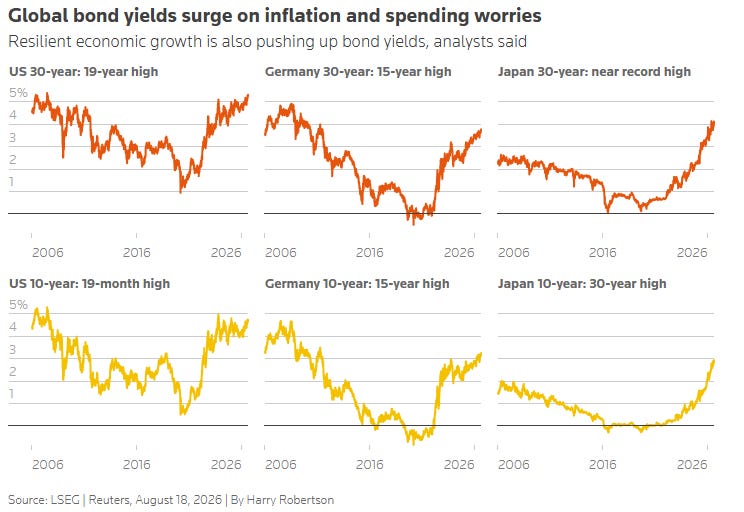
The comparables being used do little to lower expectations either. Palantir trades at around 53x expected 2026 sales, while SpaceX and Cloudflare are both around 42x. These are extremely high multiples that only make sense if future growth is both exceptional and sustainable. Applying anything similar to Anthropic on $200 billion of potential 2028 revenue quickly leads to valuations in the trillions of dollars. In this regard, Anthropic has gone from a run rate of around $9 billion at the end of 2025 to more than $47 billion in May 2026, and expects to achieve its first quarterly operating profit. The growth is real and spectacular. But extrapolating that trajectory for another two years means assuming that demand will continue to grow at extraordinary rates, that compute costs will decline relative to revenue, and that the company will retain sufficient pricing power against OpenAI, Google, Meta and the rest of the ecosystem. It is another example of the extent to which expectations surrounding AI are beginning to be reflected in extremely demanding valuations. Growing rapidly is no longer enough. You have to grow almost perfectly.The bond market is once again sending an uncomfortable signal about the macro regime we are entering. Long-term sovereign bond yields have surged simultaneously in the United States, Europe and Japan to levels not seen in decades, reflecting a combination that is becoming increasingly difficult to ignore: structural fiscal deficits, higher inflation, enormous financing needs and growing competition for capital. The question is increasingly becoming how much return investors need in order to keep financing steadily deteriorating sovereign balance sheets.
In the United States, the 30-year Treasury yield briefly rose above 5.3%, its highest level since 2007, while the 10-year is already around 4.7% and is once again approaching the feared 5% threshold. The immediate trigger has been the rise in oil above $90/bbl and the deterioration in the prospects for peace with Iran, but attributing the move solely to inflation would only scratch the surface. U.S. debt is approaching $40 trillion, the deficit remains enormous, and the term premium demanded by investors is close to a 12-year high. In other words, the market is beginning to demand additional compensation simply for taking the risk of lending money to the government for many years.
Washington also faces an additional problem on the demand side. Large technology companies need enormous amounts of capital to finance AI-related infrastructure, putting them in direct competition with the Treasury for available savings. Japan adds another layer to the problem, having historically been one of the largest buyers of U.S. debt. With the Japanese 10-year bond yield approaching 3% and the 30-year above 4%, repatriating capital is becoming much more attractive for Japanese investors. In fact, foreign holdings of Treasuries have already begun to decline, led precisely by Japan, the United Kingdom and China. The risk is that we enter a fairly unpleasant cycle. Higher yields increase governments’ refinancing costs, which pushes interest expenses even higher and forces them to issue more debt, precisely as the marginal buyer begins to demand a higher return. At the same time, sovereign bonds are the benchmark on which virtually the entire financial system is built, so a sustained increase ultimately feeds through into mortgages, corporate credit and asset valuations. It is therefore no surprise that equity markets have reacted negatively.
To put out the fire with gasoline, the U.S. Treasury has decided to temporarily double the size of its long-term debt buyback operations, from $2 billion to at least $4 billion per operation in the 10-to-20-year and 20-to-30-year sectors. The measure will remain in place between September 9 and November 4 and comes immediately after a sharp Treasury selloff that pushed the 30-year yield to 5.34%, its highest level since 2007.
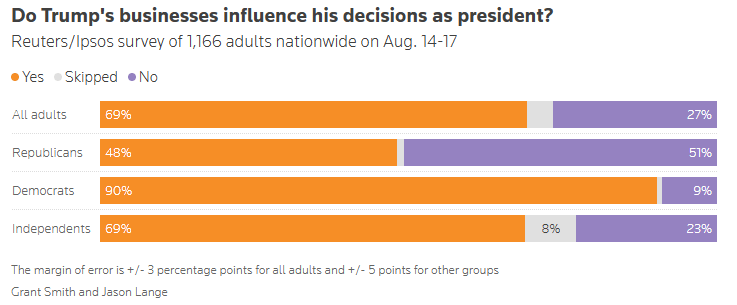
We are not talking about QE or debt monetization. The Treasury has already been conducting scheduled buybacks of older issues for years in order to improve market functioning, and the amounts remain small relative to the overall size of the market. But it is nonetheless an interesting sign of institutional sensitivity to deteriorating liquidity and the sharp rise in yields at the long end of the curve. In fact, in the previous operation investors offered nearly $20 billion of bonds into a buyback of just $2 billion, highlighting significant demand to sell long-dated paper back to the Treasury itself. While the short end may eventually benefit from Fed rate cuts, the long end is much more heavily influenced by inflation, debt supply and fiscal credibility. Increasing Treasury buybacks does not solve that problem, but it does show just how concerned policymakers are becoming about market functioning as long-term yields approach politically and economically uncomfortable levels.The blurring of political power and private business is once again becoming a problem for Trump, and this time on a scale that is difficult to ignore. A new Reuters/Ipsos poll shows that 63% of Americans believe it is inappropriate for the president and his family to have benefited from their cryptocurrency-related businesses since his return to the White House. Even more significantly, 69% believe his business interests are influencing the decisions he makes as president, a perception shared by nearly half of Republican voters.
The conflict of interest is clear, at least from a reputational standpoint. During his second term, Trump has pushed for a much more crypto-friendly regulatory framework while his family earned more than $1.4 billion over the past year through projects such as World Liberty Financial and his own memecoin. The White House insists that the president is not involved in the day-to-day management of these businesses and that his investments are managed independently, but the issue is not purely legal — it is also about incentives. When a regulatory decision can directly increase the value of assets linked to the president’s inner circle, separating economic policy from private interests becomes increasingly difficult.

And that is probably where the biggest risk for Trump lies. His electoral base has so far tolerated virtually every personal controversy, but the perception that he is enriching himself while in office touches a different nerve, especially for someone who built a large part of his political brand around the famous “drain the swamp” message. Even among Republicans, three in ten consider these business dealings inappropriate, while roughly half believe his commercial interests influence his decisions.
With the midterm elections approaching, Democrats will try to exploit this contradiction as much as possible. The poll also shows that 49% of Americans view the Republican Party as more corrupt, compared with 41% who say the same about Democrats. That does not necessarily mean it will immediately change voting intentions, given how deeply polarized the United States remains, but it does add another source of political pressure for an administration that is beginning to accumulate several of them.
The problem for Trump is not that his voters are suddenly discovering that he is a businessman. It is that they may start to believe the presidency itself has become just another extension of his business empire.
Moderna and Merck have achieved one of the most important milestones to date for mRNA technology outside COVID. Their personalized cancer vaccine, Intismeran, combined with Keytruda, met the primary endpoints of a Phase III trial in high-risk melanoma, reducing both recurrence and the development of metastases compared with Keytruda alone. It is the first time an mRNA cancer vaccine has demonstrated a positive benefit in a pivotal study and also the first combination to clearly improve on the Keytruda-based standard of care in this patient population.
The treatment logic is particularly interesting. This is not a generic vaccine, but a therapy custom-made from the specific mutations found in each patient’s tumor. Once administered, the cells produce copies of these tumor antigens, training the immune system to recognize and destroy malignant cells more effectively. The trial included 1,137 patients with previously resected stage IIB-IV melanoma, who were treated for approximately one year. Detailed data have not yet been published, nor has the overall survival result, which will be an important variable in determining the true clinical impact, although no new safety signals have emerged either.
The Phase II precedent was already promising, showing a 49% reduction in the risk of recurrence or death after five years, and these new results bring the treatment considerably closer to a potential approval. Moderna and Merck are already in discussions with regulators and, thanks to its breakthrough therapy designation, the vaccine could reach the market as early as next year. Barclays estimates that melanoma alone could generate around $3 billion in annual sales by 2035, although the more important point is probably not this market in isolation, but the validation of the platform for other solid tumors. Both companies are already testing similar approaches in lung, breast, and pancreatic cancers.
For Moderna, the result is particularly transformational. The company had spent years trying to prove that its mRNA platform could become something more than a COVID franchise, while the market had increasingly priced in the possibility that it would fail to do so. This trial completely changes that narrative by clinically validating one of the technology’s applications with the greatest economic potential. It is therefore not surprising that the shares surged as much as 160%, adding close to $40 billion in market capitalization. For Merck, the development is also highly significant, as it opens a path to extend and reinforce its leadership in oncology just as Keytruda approaches the expiry of its main patents.
The main risk now shifts from being scientific to operational and commercial. A personalized vaccine requires analyzing each patient’s tumor, designing a specific sequence, and then manufacturing the treatment, which makes scalability far more complex than for a conventional drug. Moderna says it will be able to meet demand, but this will be one of the key issues to watch, together with the eventual pricing and overall survival data. Even so, the result probably represents the most important validation of mRNA since the pandemic and opens a new chapter for immunotherapy in solid tumors. For Moderna, this could be the asset that finally justifies the entire platform it has built over the past decade.
The United States is preparing to turn the screws even further on Iran. Scott Bessent has said that Washington will announce on Monday what he describes as “the toughest sanctions in history,” combining the existing blockade with a maximum economic pressure strategy whose stated objective is no longer simply to restrict Iranian revenues, but to bring about the collapse of the regime. The message is also aimed at the rest of the world, and particularly at China, the largest buyer of Iranian crude and the destination for more than 80% of its seaborne exports. The threat is that any country providing Tehran with an economic escape route could also face consequences from Washington.
What is more interesting, however, is Bessent’s interpretation of the energy market. According to the Treasury Secretary, the recent rise in oil prices is misguided because maximum economic pressure would reduce the likelihood of another military escalation. The problem is that this interpretation conflates two different things. A lower risk of further attacks does not mean that the physical disruption already affecting the market disappears, much less that balances are suddenly in equilibrium. In fact, many of the traditional price signals have become extraordinarily difficult to interpret during this conflict. First because of the constant threat of headlines pointing to an imminent peace deal, which has kept speculative positioning restrained, and later because of various forms of direct intervention in the market. The result is paradoxical: we are going through one of the largest supply disruptions in recent history, and yet many participants are beginning to assume that the market is more or less balanced simply because prices are not reflecting a proportional level of stress.
The physical data tell a very different story. Draws are being concentrated in oil in transit and in Chinese onshore inventories, while global product inventories remain low and are declining on a counter-seasonal basis. OECD crude stocks are still showing builds, but these should turn into draws as the imbalance works its way through the system. At the same time, the Oman route is moving roughly 5 million barrels per day of crude — approximately 2.5 VLCCs per day — and the global deficit is estimated at around 3Mb/d, while visible inventories are falling by close to 1.5Mb/d.
In other words, prices may be distorted, but physical barrels are much harder to hide. If pressure on Iran intensifies while China continues buying part of its crude and transit capacity remains constrained, the adjustment will have to show up somewhere. It may take time to be fully reflected in Brent or WTI, but a deficit of several million barrels per day does not disappear by decree, nor because the market decides to look the other way. In the end, the arithmetic wins.
Model Portfolio
Year to date, the model portfolio is up +31.80%, versus +13.14% for the S&P 500 (S&P in euros), and +239.7% since inception (September 2022), compared with +70.0% for the S&P 500. The model portfolio, as of Friday's close, is as follows:
⚠️Past performance does not guarantee future results. The historical performance of the model portfolio is shown for informational and educational purposes only and does not constitute investment advice or an offer to buy or sell securities. The returns shown may not include fees, taxes, or other associated costs.
